
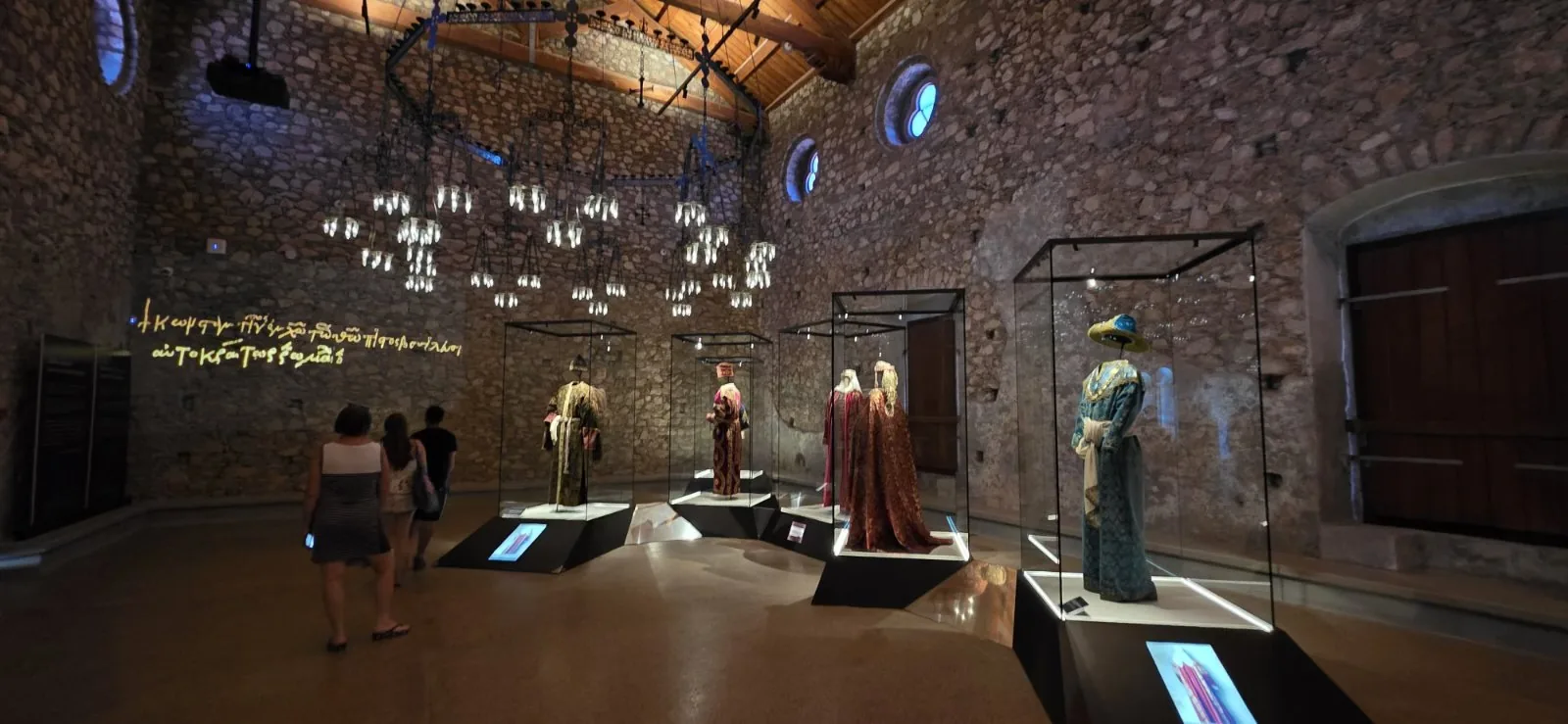
“Once, this Palace must have been most splendid… when it was inhabited by the proud Kantakouzenoi and Palaiologoi, who had brought to Mystras the luxuries and ceremonial of the Byzantine court – their noblewomen in heavy, precious silk garments, their rich and dazzling jewelry, their courtiers and their guards.”
K. Ouranis, “The Fairytale Atmosphere of Mystras”
Travels, Greece, Athens 1986.
Under the Light of the Court: Images of Glorious Vesture
(Throne Room Exhibition)
In the emblematic Throne Room, a temporary exhibition presents 19 handcrafted garments, that evoke the form and aesthetic of late byzantine vesture in Mystras, as perceived and interpreted through iconography.
The presentation of the Byzantine vestments – all handmade designs by the Sisterhood of the neighboring Pantanassa Monastery, creates a unique exhibition setting in the Throne Room, which, in turn, brings a period room back to life. As the 19 selected garments correspond to historical figures from different socio-political strata of the court, the exhibition narrative is structured in four distinct sections that map a collective portrait of the Despotate of Mystras.
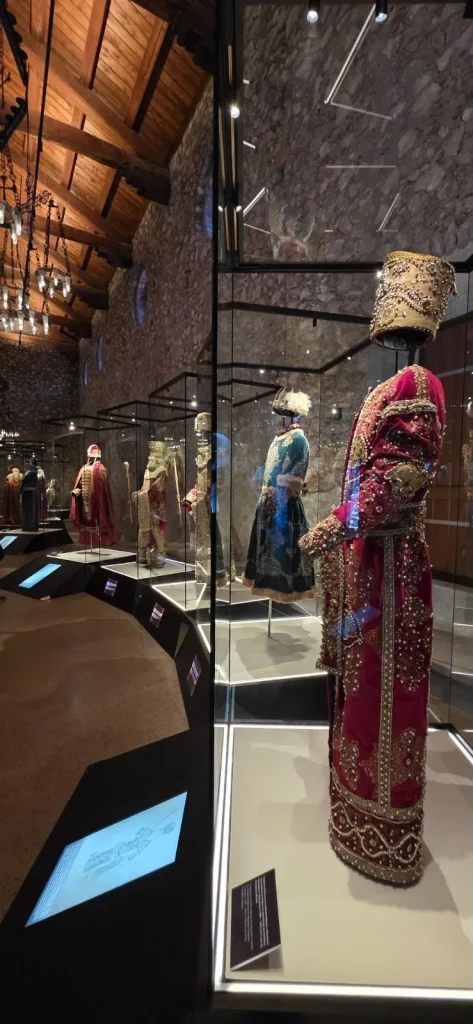
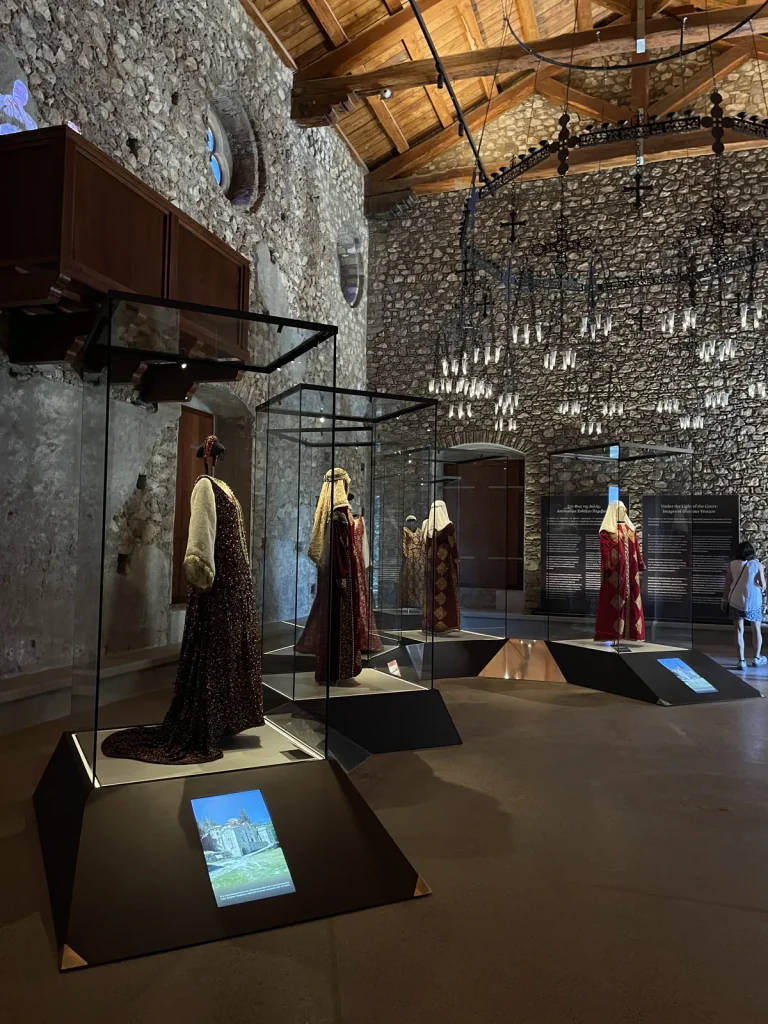
Apart from the display cases, MUEVO developed the custom exhibition structures framing the hall’s openings, the plinth for the Throne exhibit, and an integrated museum lighting system specifically designed to enhance both the exhibits and the architectural character of the room.
Our company further delivered the exhibition’s graphic interpretation, including exhibit labels and interpretive panels, as well as the A/V infrastructure, developed with the invaluable assistance of our multimedia partners at La Meduse.
Through embedded screens and large-scale projections, visitors are invited to explore the historical background of the garments, the creative process behind their reconstruction and the wider cultural significance of the Despotate of Mystras.
As beautifully described in the exhibition design concept:
“The people of the Palace emerge from oblivion into memory, as their garments seem to float and shimmer within elevated display cases that reveal the grandeur of the Throne Room, with their metal supports reflecting architectural details of the monument. The digital interpretive material projected at the bases of the showcases documents the sisterhood’s creative process alongside a wealth of historical references that highlight the importance of funerary portraits and donor representations in the churches of Mystras.”
Hegemonic Stories
(Ground Floor Hall Exhibition)
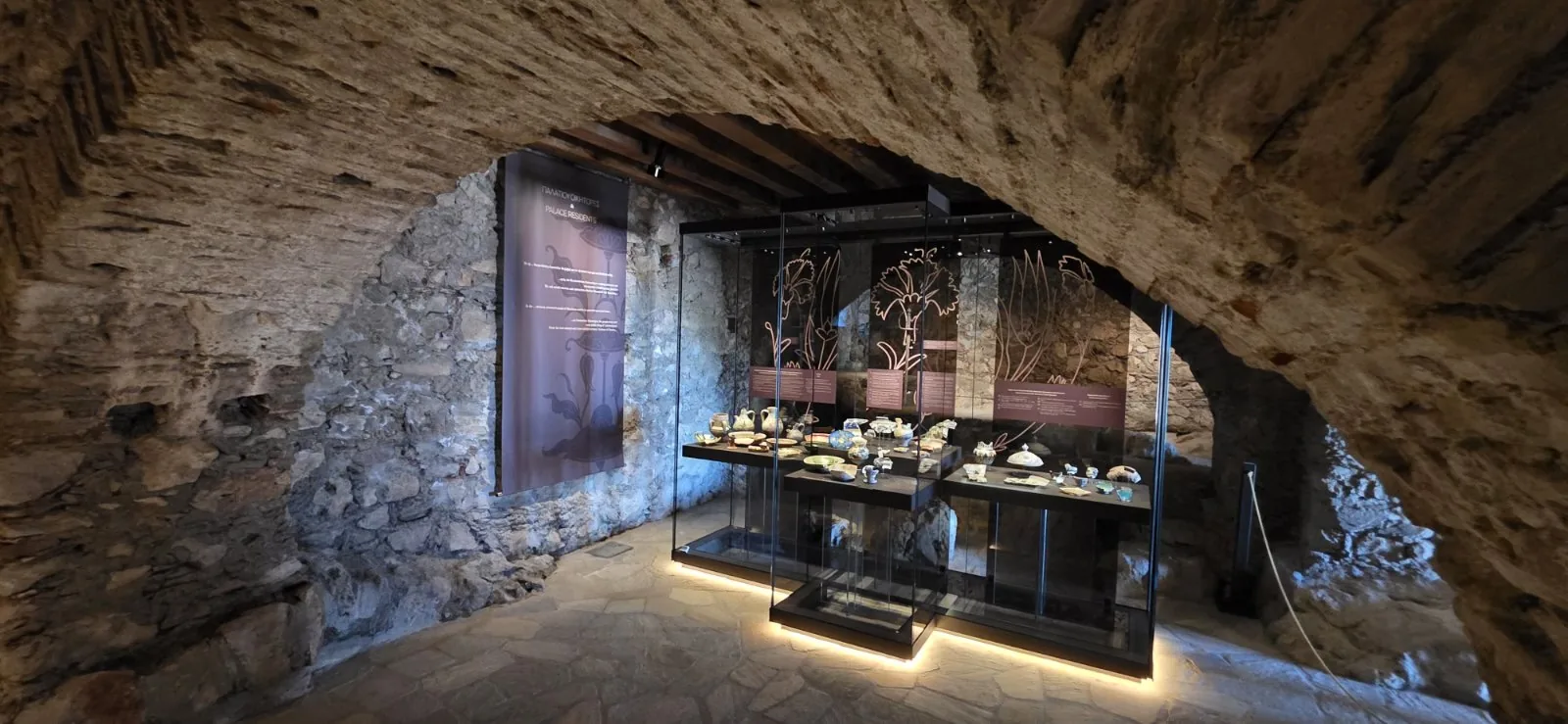
The new permanent exhibition housed in the ground floor hall of the Palaiologan wing presents archaeological material uncovered during the restoration of the Palace, including byzantine ceramics, sculptural fragments, miniature art objects and coins. Together, these finds reveal aspects of everyday life, craftsmanship and political authority within the Palace.
Drawing inspiration from the space’s vaulted architecture, the museography integrates contemporary exhibition structures within the historic fabric of the building, taking full advantage of the hall’s piers and arches, which are elevated into a core design principle.
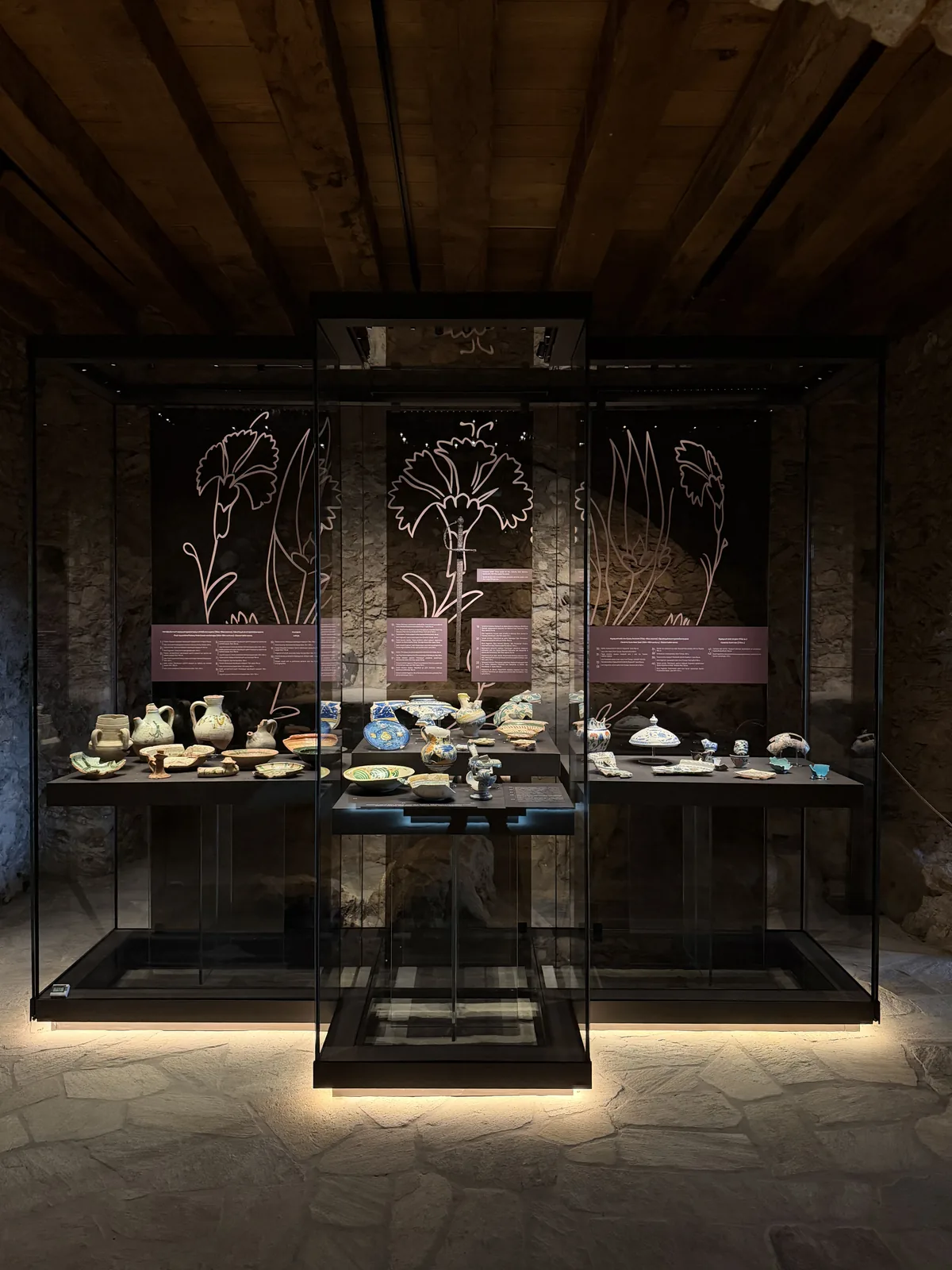
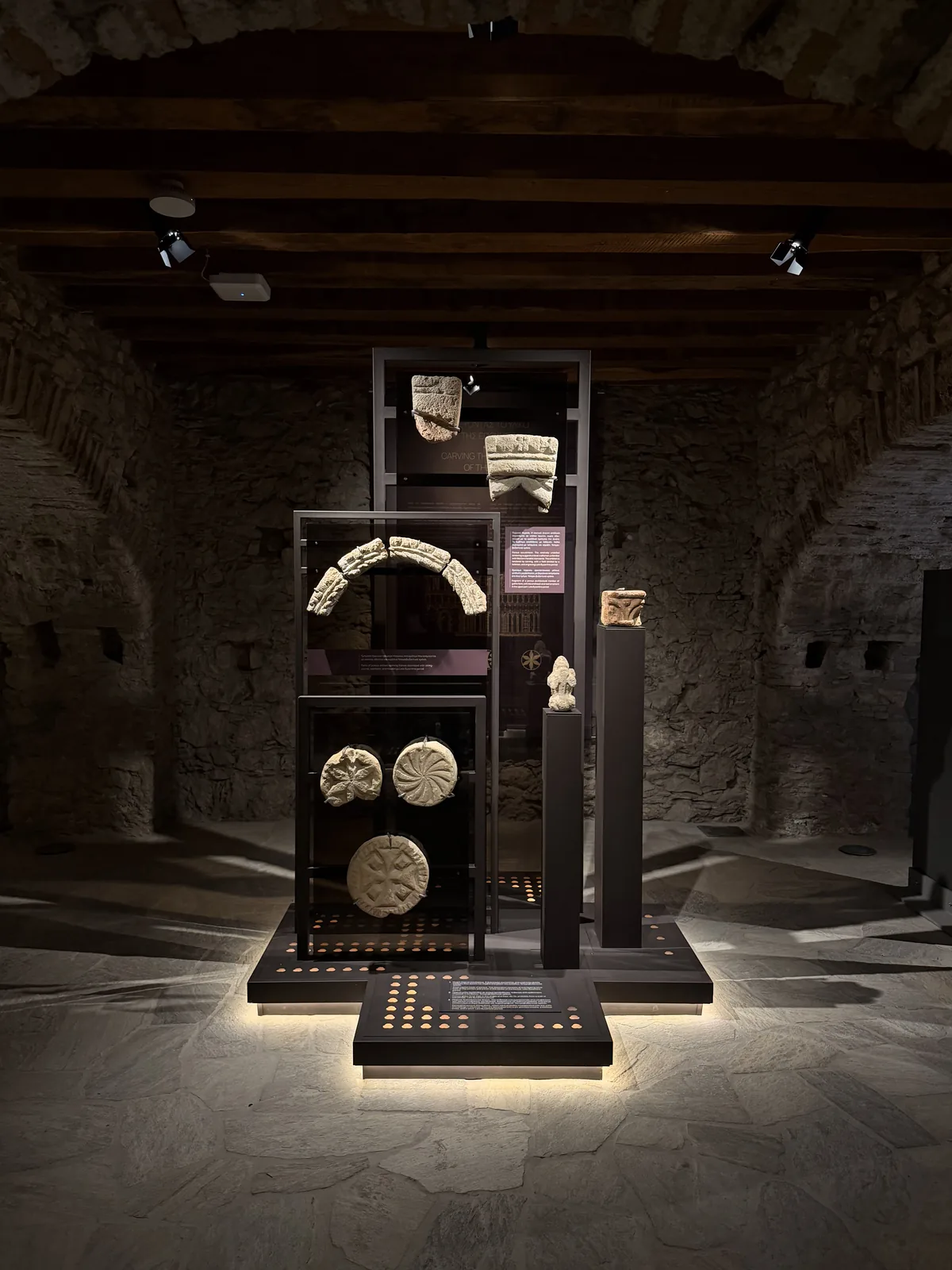
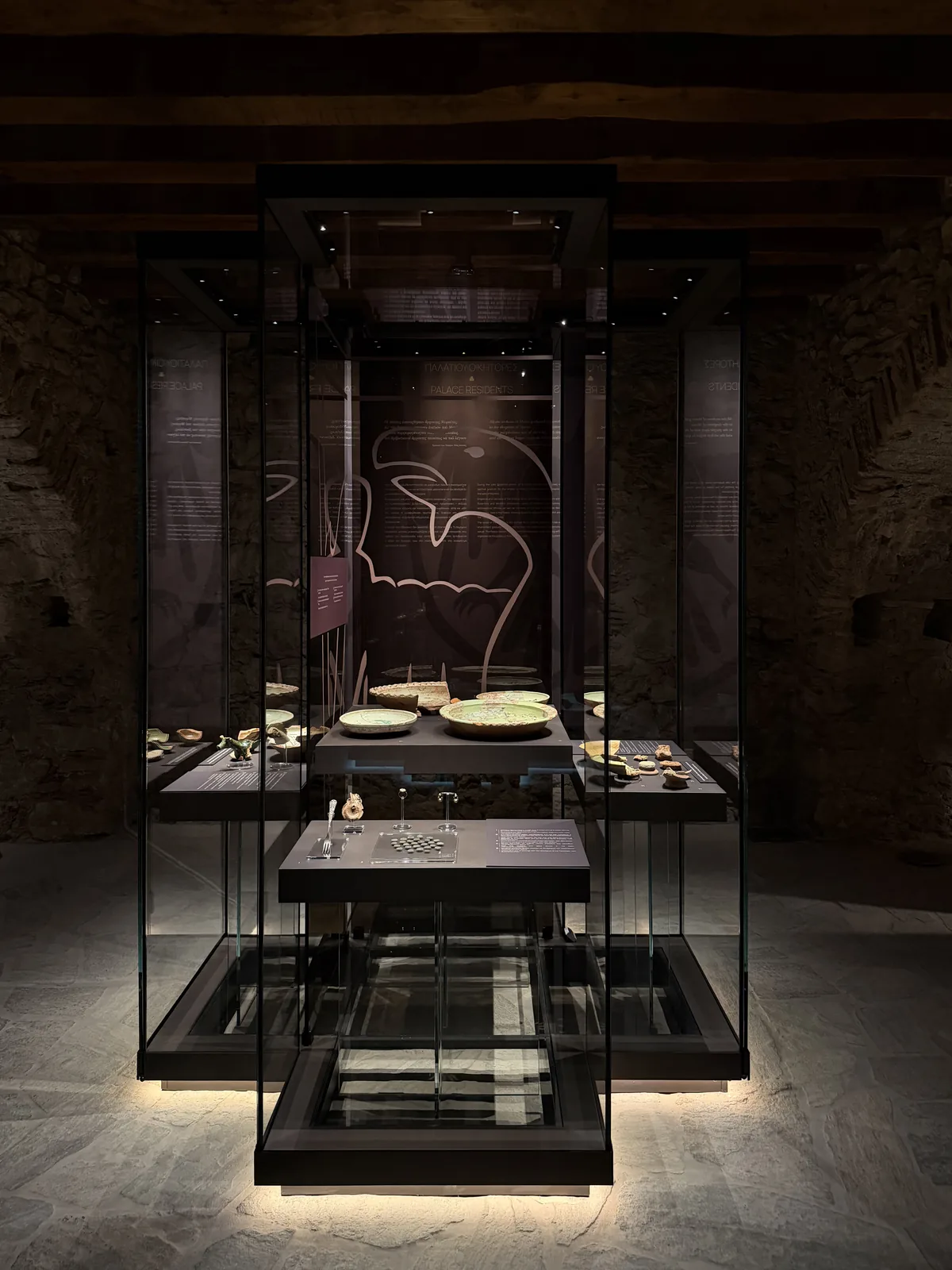
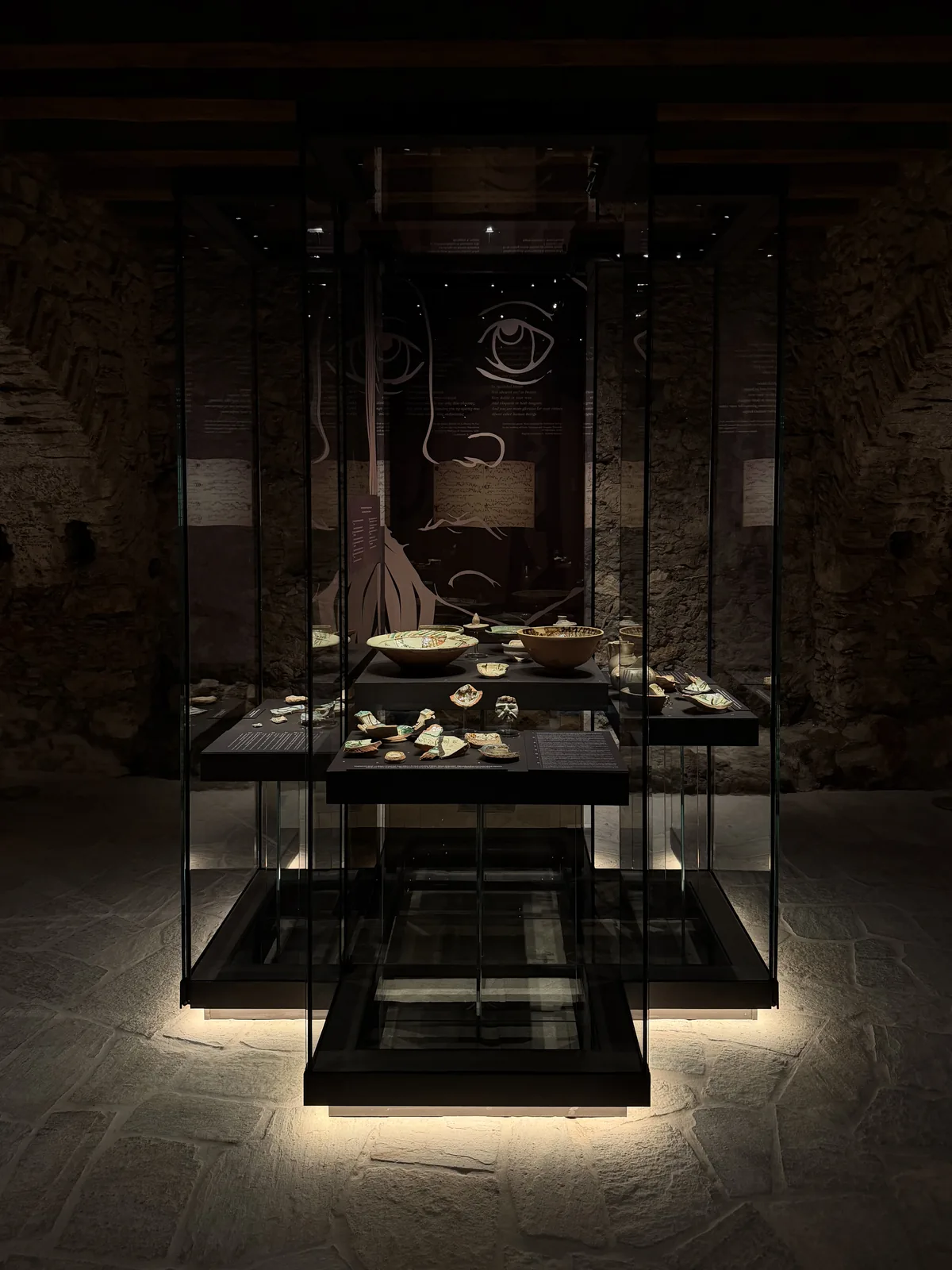
Organised into four thematic sections, the display structures establish a visitor route that is both linear and flexible. Beyond their metal framework, the exhibition elements consist almost entirely of glass and acrylic, allowing natural and artificial light to define the spatial experience. This deliberate transparency evokes the Byzantine understanding of light as both an architectural and metaphysical element, transforming the bespoke display structures into spatial landmarks that simultaneously frame the artefacts, guide movement and reinforce the exhibition’s narrative.
The Palace of the Despots and the Archaeological Site of Mystras were inaugurated anew in May 2026, after 42 years of restoration works. Given the national significance of this major cultural project, MUEVO is proud to have contributed to its completion.
Completion Date: 2026
Type: Heritage Site
